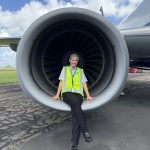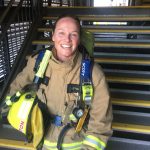
Jodi Bruce – Maintenance Engineer, Duty Technical Manager, Qantas
What is your Job?
Duty Technical Manager – Maintenance Operations Centre Qantas
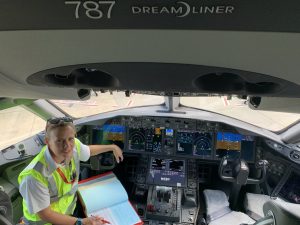
What does a normal day look like for you?
A normal day for me is a mix of technical analysis, problem‑solving, and review. It typically starts with monitoring aircraft systems and key operational parameters across the fleet. This involves reviewing data, alerts, and trends to ensure everything is operating within expected limits, and identifying any early signs that could indicate developing issues.
Throughout the day, I assess and troubleshoot aircraft defects across multiple fleets. Each defect is different, requiring understanding of aircraft systems, maintenance procedures, and operational context. Some issues can be resolved quickly, while others need deeper investigation, coordination, and follow‑up. The variety keeps the work engaging and demands both attention to detail and the ability to prioritise effectively.
I also work closely with Predictive Engineers to develop more effective ways to manage maintenance. This collaboration focuses on using data analysis to better predict failures before they occur, refine maintenance strategies, and reduce unplanned events. By combining hands‑on technical knowledge with predictive insights, we aim to shift maintenance from reactive to proactive
What is your favourite part of the job?
My favourite part of the job is that no two days are ever the same. Each day brings new challenges, different problems to solve, and opportunities to think critically, which keeps the work engaging and motivating. I enjoy working on new ways to predict failures before they happen through data analysis.
Equally important are the people I work with. Being part of a team that is knowledgeable, collaborative, and passionate about what they do makes a huge difference and easy to come to work each day.
Ultimately, working on aircraft of this complexity is both humbling and motivating. It reminds me daily of how fortunate I am to have this opportunity, especially knowing that the aircraft I work on safely transport my friends and family around the world.
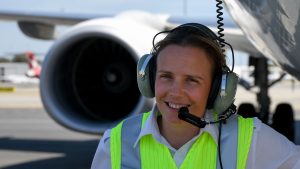
How did you get to where you are today?
I began my career in 2005, starting an apprenticeship with Qantas in the Avionics trade, specialising in electrical, instrument, and radio systems.
After completing my apprenticeship, I relocated to Adelaide, where I obtained my first aircraft type rating on the Boeing 737‑800 and became a Licensed Aircraft Maintenance Engineer. I then continued developing my knowledge by completing a Bachelor of Aviation at Griffith University, which later progressed into a Master of Aviation Management.
After relocation across to Perth in 2015, I gained an additional type rating on the Boeing 787‑9. During Covid, I returned back to Sydney and transitioned into the Maintenance Operations Centre, where I now work in my current role.
I got to where I am today by genuinely loving what I do and having a constant desire to learn more every day. When you enjoy your work, you naturally put more care and effort into it, and that commitment shows over time.
What qualifications do you need to apply for your job?
Minimum Year 10 certificate to apply for an apprenticeship
What character qualities do you think suit this position?
A genuine love for aviation and all things technical is a strong foundation for this position. Someone with a passion for aircraft will naturally take an interest in how systems operate, and how technology can be improved or maintained to the highest standard. Rather than seeing tasks as routine, they approach them with enthusiasm and a desire to understand the bigger picture, which is essential in a highly technical and safety‑focused environment like aviation.
What is involved in the training for your job or for the qualification you gained to get your job?
A four‑year apprenticeship where you are employed by Qantas, combining paid on‑the‑job training with attendance at TAFE. You can choose from 3 trade streams – Avionics, Mechanical and Structures. Upon completion of the apprenticeship you will gain a Diploma of Aeroskills in your chosen trade. Additional training is then undertaken (theory and practical) to achieve type ratings (aircraft type specific) and qualify as a Licensed Aircraft Maintenance Engineer (LAME).
If you could go back and give your younger self some advice, what would it be?
Trust that the hard work will pay off, and stop worrying so much about what other people think. In the early stages of my career, I spent a lot of energy trying to meet expectations, fit in, or seek approval. I was overly conscious of how I was perceived and often second‑guessed myself because of it. Looking back now, I realise that none of that external noise truly mattered. What mattered was showing up consistently, putting in the effort, and staying committed to learning and growing.
What advice would you give younger girls wanting to start a career in Aviation?
If it’s something you love and are passionate about you must do it. Going to a job you love each day is a blessing because it transforms work from an obligation into an opportunity. Instead of counting down the hours or dreading Mondays, you find fulfilment and drive in being there and contributing. Aviation has so many avenues that can be taken, it is definitely not a one way road. Get in and find what you like doing!